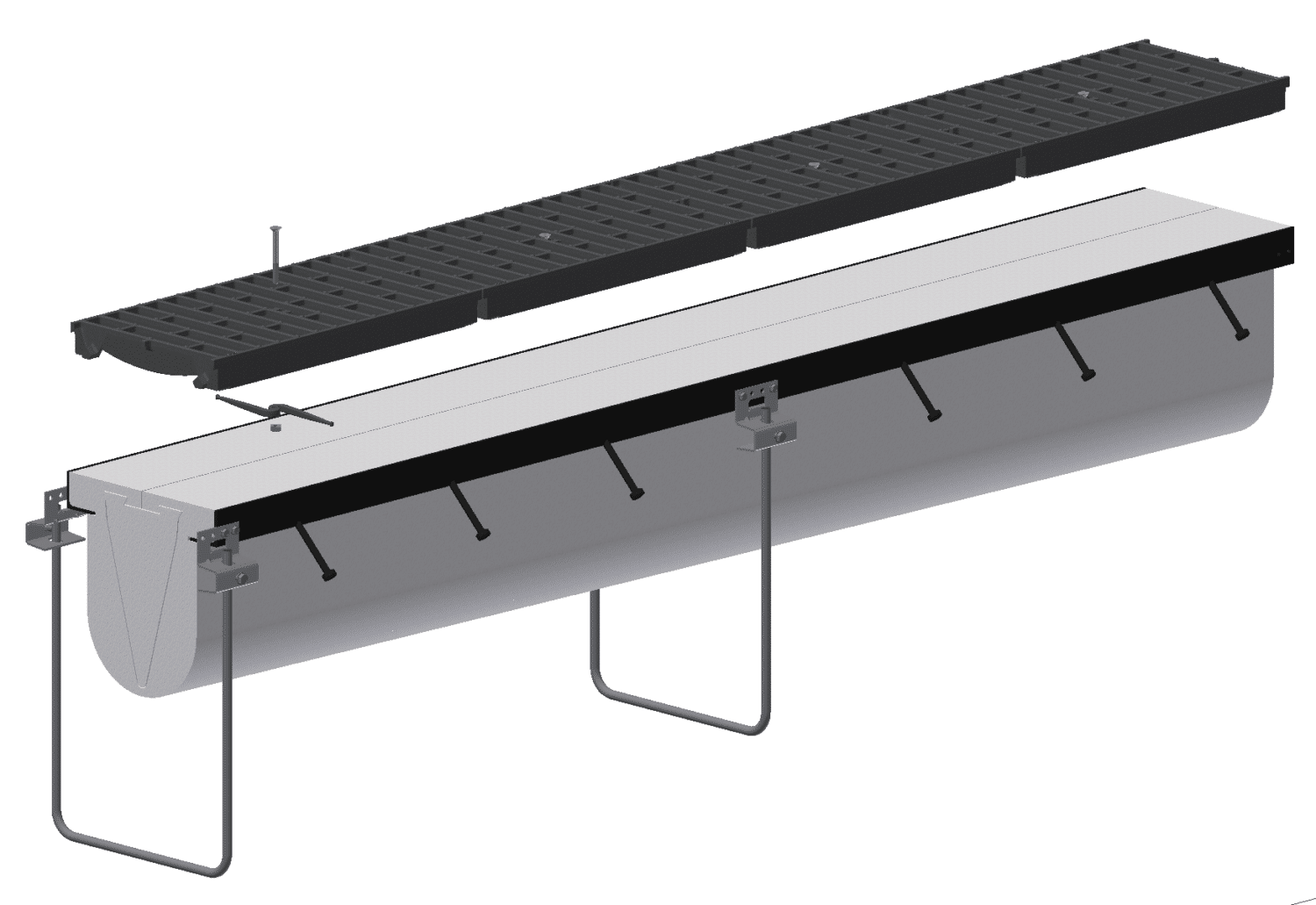
DRAINAGES SYSTEMS
We design drainage channels and amazing channel capacity, minimize erosion and redundancy.
Appearance
Swale drains are, in essence, a shallow ditch lined with turf grass or similar vegetation. They are a broader and more shallow system, which makes them more subtle than traditional trench-style systems.
What They Do
Swale drains are used to help slow and control water runoff that occurs outdoors. They also help to prevent any water from flooding, puddling or eroding the surrounding soil. They also help keep storm drains from being overwhelmed by a sudden influx of water by spreading water on a larger surface and keep the runoff from draining too quickly.
Where You Find Them
This system is commonly found around both residential and commercial areas of landscaping.
Point Drains
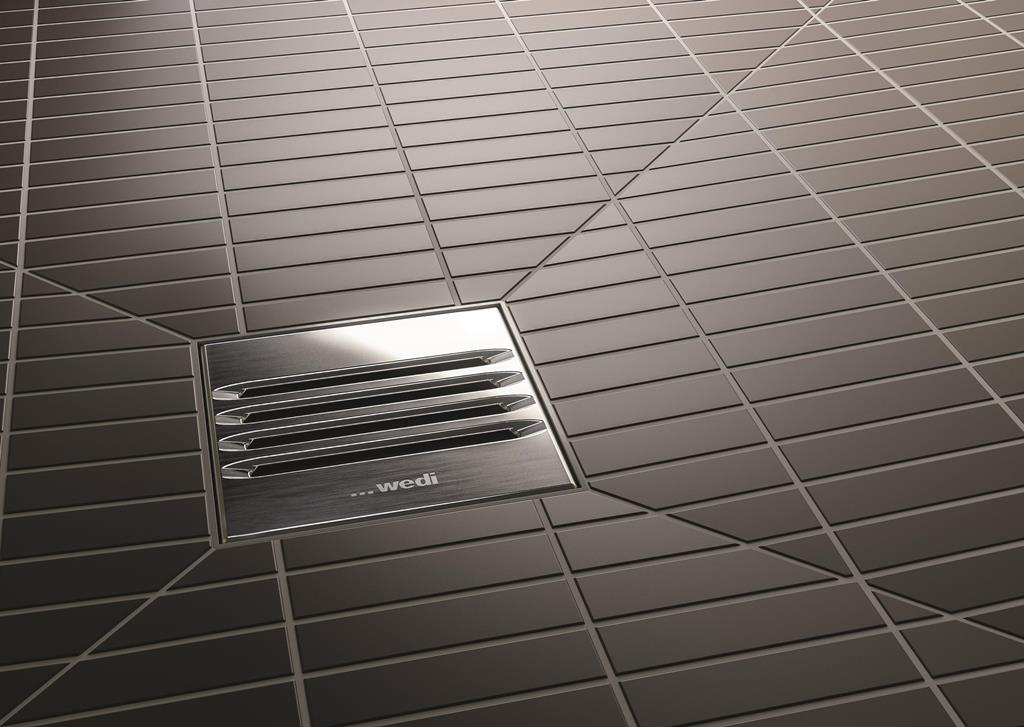
Appearance
This is a subsurface system that requires floors to be sloped in the direction of the drain. When multiple drains are needed, this can create an unattractive, unleveled appearance and result in difficulties in planning and setting up the facility.
What They Do
These drains work by collecting water from a single point or gully, like the drain you find in the middle of a shower.
Where You Find Them
Point drains are common in places where drainage is needed from a specific point due to structural or topographical needs.
French Drain
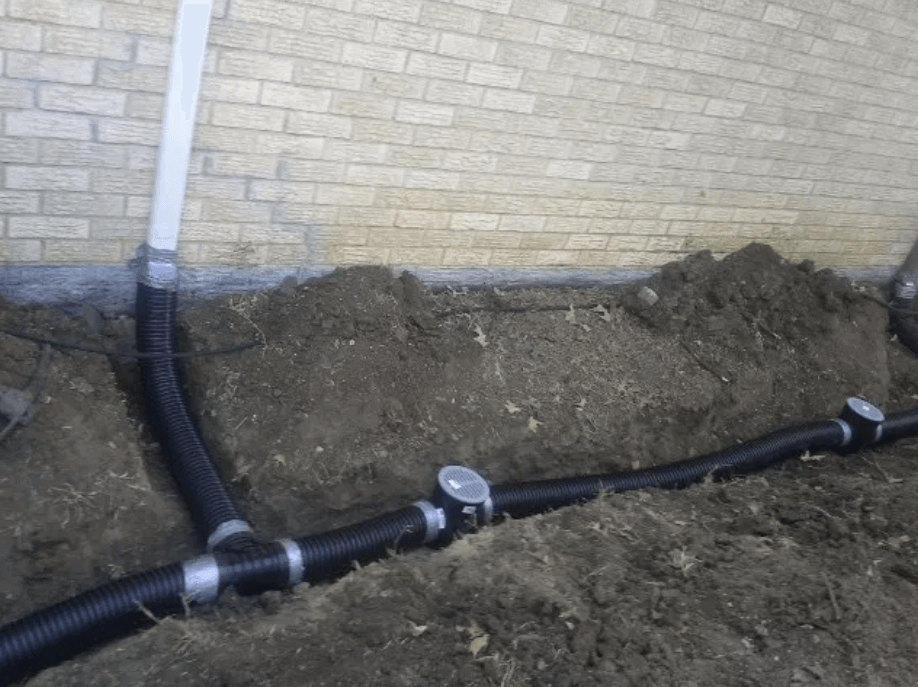
Appearance
It is a subsurface structure that consists of a perforated pipe that is installed flat in a yard with a sloped trench that helps move water runoff from a highest point at the start to the lowest at the end, where it goes into a sewer, cistern, or swale.
What They Do
French drains help to redirect water from wherever the drain starts–usually close to the foundation of a structure–to some sort of sewer or cistern. In general, French drains are used to help the natural flow of water from high to low.
Where You Find Them
French drains are a common system used in residential areas to redirect water away from homes and landscaping.
Trench Drains
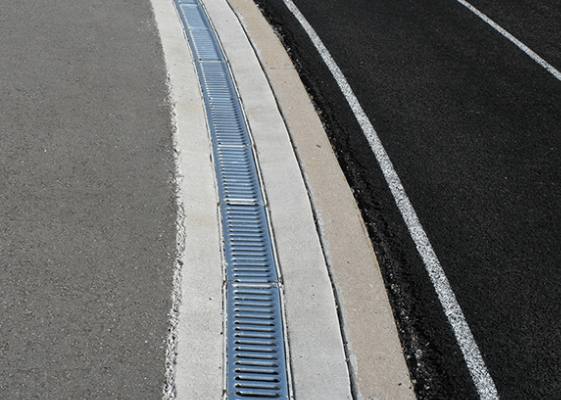
There are many different types of drainage systems that fall under the “trench drain” umbrella, from the standard trench drain to more specific kinds.
Appearance
Unlike other systems on the list, trench drains are a surface system. In essence, a trench drain consists of a large trench that has a drain channel set in place with concrete. This channel can be very narrow or very wide and is usually covered with a heavy metal grate.
What They Do
Trench drains work by intercepting the flow of water runoff over vast expanses of ground. They take the water from the surface of the ground and through the channel, where it eventually reaches a final drainage point.
Where You Find Them
These systems are usually found around commercial buildings, including restaurants and loading docks. You can also find them on city streets and even pool decks.
HDPE Drains
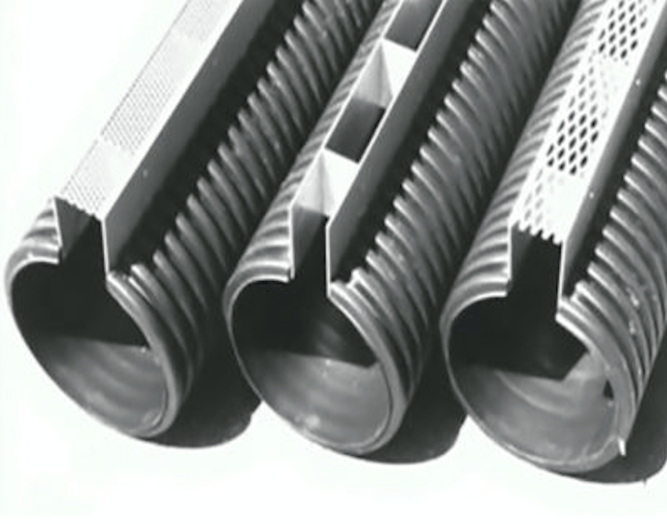
High-density polyethylene trench drains are a newer innovation in terms of drainage systems that have become popular.
Appearance
These systems have pre-engineered, modular channel sections that are lightweight and easy to install. They are smooth in texture and highly durable as well. Like with tradition trench drains, HDPE systems still require a grate covering.
What They Do
Like your regular trench drain system, HDPE drains work by redirecting water from the surface of an area to the drain channel where it can be moved to a disposal area, such as sewage.
Where You Find Them
Because of their high chemical resistance and overall durability, HDPE drains are an excellent option for industrial applications.
Cast-In-Place Trench Drains